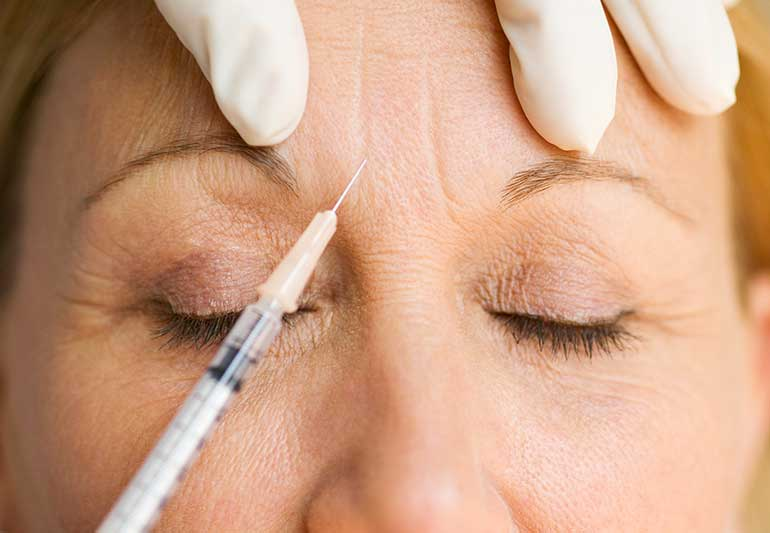
Xeomin is a prescription injection of incobotulinumtoxinA, a botulinum toxin type A, the same type of toxin as Botox. It temporarily relaxes the muscles that cause expression lines. The FDA has approved it for frown lines, forehead lines and crow’s feet in adults, as well as several medical conditions. Its main technical difference from Botox is that it contains the active toxin without the accessory proteins.
This guide explains what Xeomin is, what it is approved for, how it differs from Botox, and what the label says about side effects.
What is Xeomin?
Xeomin is the brand name of incobotulinumtoxinA, made by Merz. According to its prescribing information, it was first approved in the United States in 2010. Like other botulinum toxins, it blocks the signal from nerve to muscle, so the injected muscle relaxes for a period of time.
The American Academy of Dermatology (AAD) describes cosmetic botulinum toxin injections as a way to soften lines caused by facial expressions, and notes that results are temporary.
What is Xeomin approved for?
The current prescribing information, revised in February 2026, lists these cosmetic uses in adults:
- moderate to severe frown lines between the eyebrows (glabellar lines);
- moderate to severe horizontal forehead lines;
- moderate to severe crow’s feet (lateral canthal lines).
It is also approved for medical conditions, including chronic drooling (sialorrhea), upper limb spasticity, cervical dystonia and blepharospasm.
The label says retreatment should be given no more often than every three months.

Xeomin vs Botox: how they differ
| Xeomin | Botox Cosmetic | |
|---|---|---|
| Active ingredient | incobotulinumtoxinA | onabotulinumtoxinA |
| Formulation | Active toxin separated from the accessory proteins | Neurotoxin complex (the label’s term) |
| Storage of unopened vials | At or below 25°C; refrigeration not required | In a refrigerator (2°C to 8°C) |
| Approved cosmetic areas | Frown lines, forehead lines, crow’s feet | Frown lines, forehead lines, crow’s feet, platysma (neck) bands |
The accessory proteins are what the Xeomin label calls hemagglutinins and non-hemagglutinins; its manufacturing process removes them, leaving the active 150 kDa neurotoxin. You may read claims that this makes Xeomin “purer” or less likely to stop working over time. We did not find an authoritative source that establishes a practical difference for patients, so we do not make that claim.
Units are not interchangeable
The Xeomin label states that its units of biological activity cannot be compared to or converted into the units of any other botulinum toxin product. A dose of Xeomin is not the same as the same number of units of Botox or Dysport. Your provider doses each product on its own terms.
Our comparison of Botox, Xeomin and Dysport covers all three products side by side.
Side effects and safety
In the clinical trials for upper facial lines described in the label, the most common side effects were bruising or a small collection of blood at the injection site, headache, and drooping of the brow. These tended to become less frequent with later treatments.
Like all botulinum toxin products, Xeomin carries a boxed warning about distant spread of toxin effect: the effect may spread from the injection area and cause symptoms such as swallowing and breathing difficulties, which can be life threatening. These have been reported hours to weeks after injection.
Who should not have Xeomin
The label lists two contraindications:
- a known allergy to botulinum toxin type A or to the other ingredients (human albumin and sucrose);
- an infection at the planned injection site.
It also notes that, based on animal data, Xeomin may cause harm in pregnancy. Tell your provider if you are pregnant or planning a pregnancy, and about any muscle or nerve condition and the medicines you take.
What to expect
Treatment is a series of small injections into the targeted muscles. The label gives the maximum dose for treating all three upper facial areas in one session as 64 units. Results are temporary, and treatment is repeated no more often than every three months.
For aftercare questions, see exercise after Botox, which applies to botulinum toxin injections generally.
Frequently asked questions
Is Xeomin better than Botox?
Neither is established as better for cosmetic use in general. They are approved for overlapping areas, and the choice often comes down to your provider’s experience and your response to treatment.
Is Xeomin the same as Botox?
No. Both are botulinum toxin type A, but they are different products with different formulations, and their units are not interchangeable.
How long does Xeomin last?
Results are temporary. The label sets a minimum gap of three months between treatments; how long the effect lasts varies from person to person.
Next step
You can read about Botox and Xeomin at Beauté Medical Aesthetics, or book a consultation to discuss which product suits you.
Sources
- U.S. Food and Drug Administration. Xeomin (incobotulinumtoxinA) prescribing information. Revised February 2026.
- DailyMed. Botox Cosmetic (onabotulinumtoxinA) prescribing information. Updated January 8, 2026.
- American Academy of Dermatology. Botulinum toxin therapy: Overview.

Double Board Certified Nurse Practitioner
Beauté Medical Aesthetics