

Laser tattoo removal fades or removes the ink over several sessions. A cover-up hides the old tattoo under a new one. Removal suits people who want clear skin or a blank canvas, and it takes time and may not be complete. A cover-up is quicker but leaves you with a tattoo, usually a larger and darker one. This guide compares the two and explains what affects the result of laser tattoo removal.
How laser tattoo removal works
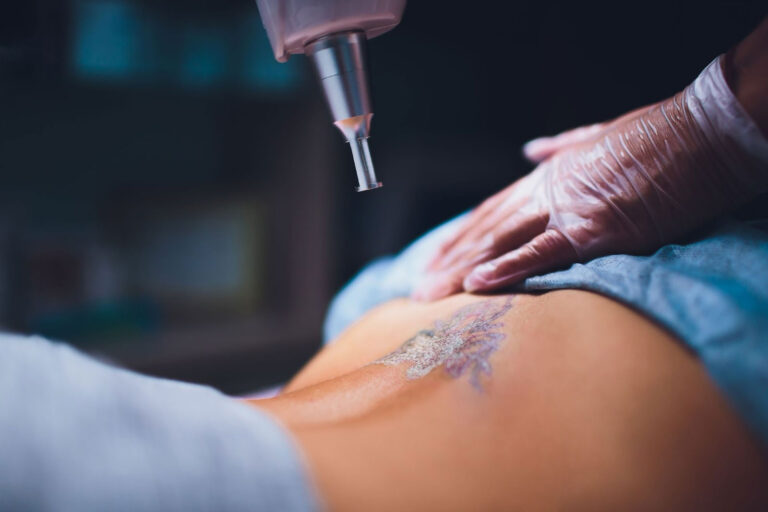
The FDA explains that laser light shatters tattoo ink into small particles, which the body’s immune system clears over time. It is the most common method health care professionals use to remove or lighten tattoos, and the FDA has cleared several types of laser for it.
Removal takes multiple treatments, with a few weeks between them so the skin can heal. The FDA says complete removal “can take many treatments, and in some cases may not be possible.”
What affects the result
Ink color. The FDA says dark blue and black are the easiest colors to remove, and green, red and yellow are the hardest. Multi-colored tattoos may need more than one laser.
White and skin-toned ink. Flesh-colored tattoos, white ink and permanent makeup are, in the FDA’s words, “particularly tricky,” because these pigments can turn black when treated by laser and can then no longer be treated.
The tattoo itself. The American Academy of Dermatology (AAD) lists how long you have had it, how deep the ink is and where it sits on your body.
Who does it. The AAD says results “depend almost entirely on the person performing the tattoo removal,” and that side effects are more common when that person lacks medical training.
Laser tattoo removal vs cover-up
| Laser removal | Cover-up | |
|---|---|---|
| End result | Faded or clear skin | A new tattoo over the old one |
| Time | Multiple sessions, weeks apart | One or a few tattoo sessions |
| Limits | Some colors resist; complete removal is not always possible | The new design has to be dark and large enough to hide the old one |
| Main risks | Lighter or darker patches, scarring, infection | The usual risks of tattooing |
| Who performs it | A trained health care professional | A tattoo artist |
The two can be combined. Lightening a tattoo with laser before a cover-up is an option to ask about.
Side effects
The FDA says laser removal can leave the treated skin lighter than the skin around it, and lists possible scarring, infection, pinpoint bleeding, redness and soreness. The AAD adds that light or dark spots tend to disappear within 6 to 12 months, and that redness, swelling and a little blistering are expected after a session.
Who is a good candidate for removal
The AAD says most people can safely have laser tattoo removal. It needs a healthy immune system to work, and women who are pregnant or breastfeeding should not be treated. Tell your provider if you have ever had a raised scar.
Is laser tattoo removal worth the price?
That depends on what you want at the end. If you want the skin clear, removal is the only route. If you are happy to have a tattoo in that place, a cover-up is usually faster.
The total cost of removal is driven by the number of sessions, and that depends on the size, colors and age of the tattoo. Ask for an estimate after your tattoo has been examined, and ask how realistic complete removal is for your ink colors.
What is not worth the price is a shortcut. The FDA has not approved any tattoo removal cream or home kit, and warns that they may cause rashes, burns or scars.
Frequently asked questions
How many sessions does it take?
It varies. The FDA says the number depends on the size of the tattoo and its colors, and that complete removal can take many treatments.
Can every color be removed?
No. Black and dark blue respond best. Green, red and yellow are harder, and white or skin-toned ink can darken under the laser.
Next step
You can read about PiQo4 laser tattoo removal at Beauté Medical Aesthetics and about preparing for removal and aftercare, or book a consultation to have your tattoo assessed.
Sources
- U.S. Food and Drug Administration. Tattoo Removal: Options and Results.
- American Academy of Dermatology. Tattoo removal: Lasers outshine other methods.

Double Board Certified Nurse Practitioner
Beauté Medical Aesthetics