VI Peel and SkinPen can be combined in one treatment plan, usually as alternating visits and not on the same day. VI Peel is a branded chemical peel that removes the outer layers of skin to fade discoloration. SkinPen is a microneedling device that prompts the skin to make collagen. The maker of VI Peel recommends alternating the two every four to six weeks. We found no published study of this exact pairing, so the case for it rests on what is known about each treatment and on one small trial of a different peel.
This guide explains what each treatment does, what the evidence says about combining them, and how to prepare and recover.
What VI Peel is
VI Peel is a chemical peel made by Vitality Institute and applied in a clinic. The manufacturer says it has six formulas, five for the face and one for the body, and that it should only be applied by a trained provider.
Chemical peels in general are used for more than appearance. The American Academy of Dermatology (AAD) says dermatologists use them to treat some types of acne, age spots, uneven skin tone, melasma, fine lines, rough skin and sun damage. For more on depths and recovery, see our guide to chemical peels.
What SkinPen microneedling is
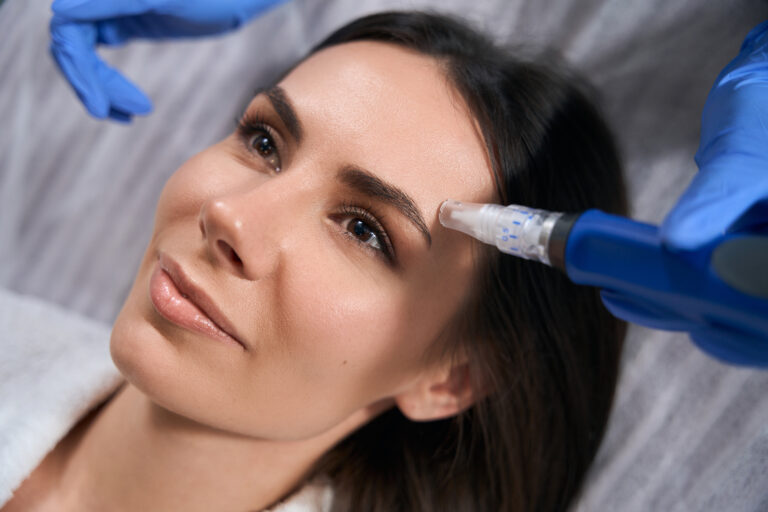
SkinPen is a motorized pen with fine, sterile needles that make tiny punctures in the skin. As the skin heals it produces collagen. The FDA authorized SkinPen in 2018 for improving the appearance of facial acne scars in adults aged 22 and over, and in 2021 cleared it for wrinkles of the neck.
Our guide to SkinPen microneedling covers the clinical study behind that authorization.
Why the two are paired
They work on different things. A peel acts on the surface layers and on pigment. Microneedling acts on collagen deeper in the skin, which matters more for scars and texture.
The manufacturer of VI Peel promotes the pairing for stubborn discoloration such as melasma. Its claim is that microneedling breaks up pigment and the peel then lifts it from the skin. That is the company’s own account.
VI Peel and SkinPen together: what the evidence says
We found no published clinical study of VI Peel combined with SkinPen. The nearest evidence uses a different peel.
A 2019 randomized study in the Journal of Cosmetic and Laser Therapy treated 60 people with acne scars. One group had microneedling, one had a superficial peel called Jessner’s solution, and one had both. The group that had both improved most and needed the fewest sessions. This was a small study of one type of scar and one peel, so it supports the idea of combining the two approaches, not this specific product pairing.
The AAD makes a general point in its advice on chemical peels: results from many research studies show that combining treatments can lead to better, longer-lasting results.
Same day or separate visits?
The manufacturer of VI Peel recommends alternating the peel and microneedling every four to six weeks, as your practitioner advises. It also says most other treatments are safe for the skin four weeks after a VI Peel.
There is a reason to be cautious about putting anything on freshly needled skin. The FDA states that microneedling devices are not approved for delivering cosmetics, creams, drugs or other substances into the skin. If a provider proposes both on the same day, ask why and in what order.
How to prepare
The AAD advises telling your provider, before a peel:
- whether you take, or have ever taken, isotretinoin;
- all other medicines and supplements, including aspirin;
- whether you get cold sores;
- whether your skin scars easily;
- what surgery and cosmetic treatments you have had.
It adds that some patients need a skin care plan for two to four weeks before a peel, which your provider will explain. For microneedling, the FDA says to avoid treatment if you are tanned or will be in the sun in the two weeks afterwards.
Recovery after each treatment
After VI Peel
The manufacturer describes the usual course: some flaking by day two, peeling from about day three to day five, and most patients finished by day seven. Its instructions include:
- no makeup or other products for the first four hours;
- no exercise for 72 to 96 hours;
- no direct or extreme sun for seven days, with sunscreen every morning;
- no swimming for 7 to 10 days;
- do not pull at peeling skin.
The AAD adds that rubbing or scratching peeled skin can cause infection, and that skin left to dry and crack can scar.
After SkinPen
The AAD says skin may look red and feel sunburned, which usually settles within a few days to a week. It advises waiting 24 hours before applying makeup. Follow the aftercare your provider gives you.
Risks and who should not have them
Each treatment has its own list, and both apply to a combined plan.
VI Peel. The manufacturer says it is not suitable if you are pregnant or breastfeeding, are allergic to aspirin, hydroquinone or phenol, have used isotretinoin in the past six months, have active cold sores, warts or open wounds, have had chemotherapy or radiation in the past six months, or have an autoimmune or liver condition. It notes that this list is not complete.
Microneedling. The FDA says it may not be suitable if you have a bleeding disorder or take blood thinners, have a weakened immune system or uncontrolled diabetes, have an active skin infection or cold sore, have a history of keloid scars, have taken isotretinoin in the past six months, or are pregnant or breastfeeding.
For peels, the AAD lists persistent redness, temporary darkening of the skin, lighter skin colour and, rarely, scarring as possible side effects.
Darker skin tones
The manufacturer says VI Peel is safe for all skin tones. The AAD’s position on peels in general is more careful. It says people with skin of color can safely have a chemical peel, but should see someone with expertise in treating darker skin, because without that knowledge they can develop permanent pigment problems. Ask how many peels your provider has performed on skin like yours.
Questions to ask
- Which VI Peel formula do you recommend for my concern, and why?
- Will the peel and microneedling be on separate visits? How far apart?
- How many of each do you recommend?
- What experience do you have with my skin tone?
- What result is realistic, and when would I see it?
Frequently asked questions
How many treatments will I need?
The manufacturer recommends a series of three to six VI Peels for best results. For acne scars, the AAD mentions three to five microneedling sessions. Your provider will set the plan.
How far apart are the treatments?
The manufacturer suggests alternating every four to six weeks.
Which should I have if I only want one?
It depends on the concern. Peels are used mainly for discoloration and surface texture. SkinPen is authorized for acne scars and neck wrinkles.
Next step
You can read about VI Peel and SkinPen microneedling at Beauté Medical Aesthetics, or book a consultation to discuss a plan for your skin.
Sources
- Vitality Institute. VI Peel: Your Questions, Answered. Manufacturer’s page.
- Vitality Institute. Microneedling + VI Peel Treatment Series. Manufacturer’s page.
- Ali B, ElMahdy N, Elfar NN. Microneedling (Dermapen) and Jessner’s solution peeling in treatment of atrophic acne scars: a comparative randomized clinical study. Journal of Cosmetic and Laser Therapy. 2019;21(6):357-363.
- American Academy of Dermatology. Chemical peels: Overview.
- American Academy of Dermatology. Chemical peels: FAQs.
- American Academy of Dermatology. Chemical peels: Preparation.
- U.S. Food and Drug Administration. Microneedling Devices.
- American Academy of Dermatology. Microneedling can fade scars, uneven skin tone, and more.

Double Board Certified Nurse Practitioner
Beauté Medical Aesthetics