


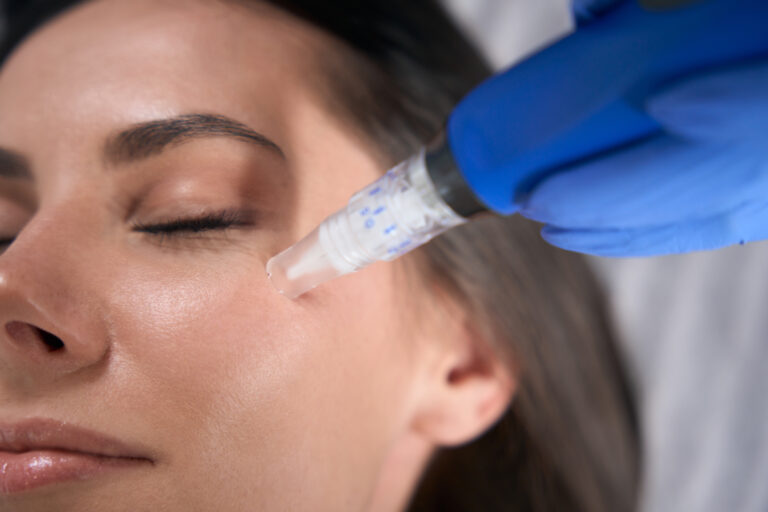
SkinPen microneedling uses a pen-shaped device with fine, sterile needles to make tiny punctures in the skin. As the skin heals, it produces new collagen, which can make acne scars and lines less noticeable. The FDA first authorized SkinPen in 2018, through its pathway for new types of device, for improving the appearance of facial acne scars in adults aged 22 and over. It was later cleared for wrinkles of the neck.
This guide explains how SkinPen microneedling works, what it is authorized for, what results to expect, and who should avoid it.
How SkinPen microneedling works
The FDA describes microneedling devices as instruments that create many small puncture holes by repeatedly inserting fine needles into the skin. SkinPen is a motorized pen. The practitioner adjusts how deep the needles go.
The American Academy of Dermatology (AAD) explains why this helps. Microneedling stimulates the body to make collagen, which is why it is also called collagen induction therapy. When it is done properly, the skin heals the tiny holes “with just the right amount of collagen,” which can lead to less noticeable scars and wrinkles and more even tone and texture.
Collagen and elastin are the proteins that keep skin firm and smooth, as Cleveland Clinic puts it.
What SkinPen is FDA-authorized for
The FDA’s records show two decisions for the SkinPen Precision System:
- March 2018. Authorized to improve the appearance of facial acne scars in adults aged 22 or older.
- April 2021. Cleared to improve the appearance of wrinkles of the neck, for Fitzpatrick skin types II to IV, and for facial acne scars in adults of all skin types.
The FDA’s review notes that the device was not clinically evaluated at needle depths greater than 1.5 mm.
Microneedling is also used for other concerns. The AAD lists dark spots, large pores, melasma, stretch marks, surgical scars and uneven texture among the things dermatologists use it for. For uses outside a device’s authorization, the FDA says the risks “are not known.”
What results to expect
Results build slowly, because collagen takes time to form. The AAD says you may see improvement within a few weeks, and that full results usually take several months. Cleveland Clinic gives three to six months.
The study behind SkinPen’s first authorization gives a realistic picture. Participants with acne scars had three treatments, 30 days apart. Six months later, 11 of the 20 people treated with SkinPen showed some improvement on a scar scale, and 7 of them improved by a full grade. That is a real but modest effect, and it did not work for everyone.
For acne scars more generally, the AAD says you may need three to five treatments, two to four weeks apart.
How long results last
The AAD explains that results fade as the body loses collagen, and that people lose it at different rates. Protecting your skin from the sun and not smoking slow that loss. A maintenance session once a year may be recommended.
What treatment and recovery are like
Cleveland Clinic describes the usual steps. The skin is cleaned and a numbing cream is applied 30 to 45 minutes beforehand. During treatment you may feel warmth or a scratching sensation, with more discomfort over bony areas.
Afterwards, the AAD says treated skin may look red or darker and feel sunburned, with minor discomfort or swelling that usually settles within a few days to a week. Most people return to normal activities straight away. It advises waiting 24 hours before applying makeup.
Follow the aftercare instructions your provider gives you, and stay out of the sun until your skin has healed.
Risks and side effects
The FDA lists these for authorized uses of microneedling devices:
- Common: dryness, rough skin, tightness, redness, itching, peeling, discomfort, burning, bruising, bleeding and crusting.
- Less common: changes in skin pigment, reactivation of cold sores, swollen lymph nodes and infection.
Most side effects appear soon after treatment and resolve. The FDA adds that some can be long-lasting, and that microneedling does not always give the result hoped for.
Two FDA points are worth asking about directly:
- A new needle cartridge should be used for every patient and every session. Re-using a cartridge is unsafe, even if it has been cleaned.
- Microneedling devices are not approved for delivering cosmetics, creams, vitamin solutions, drugs or blood products such as platelet-rich plasma into the skin.
Who should avoid SkinPen microneedling
The FDA says the procedure may not be suitable if you:
- have a bleeding or clotting disorder, or take blood thinners;
- have a weakened immune system or uncontrolled diabetes;
- have an active skin infection, rash or cold sore outbreak;
- have eczema, psoriasis, vitiligo or an autoimmune disease;
- have taken isotretinoin in the past six months;
- have a history of keloid scars;
- are pregnant or breastfeeding;
- are tanned or will be in the sun in the two weeks after treatment.
It also notes a risk of darkening or lightening of the skin in darker skin types, and that some authorized devices were not studied in darker skin. SkinPen’s own study included participants with skin types V and VI, and its 2021 clearance for acne scars covers all skin types.
Professional treatment and home devices
The AAD says products sold for home microneedling are not meant to puncture the skin and give less noticeable results. It warns that home devices can cause infection or scarring and can spread warts and cold sore viruses across the skin.
Frequently asked questions
How many SkinPen sessions will I need?
The clearance study used three sessions a month apart. The AAD mentions three to five for acne scars. Your provider will advise based on your skin.
Does it hurt?
Numbing cream is applied first. Cleveland Clinic describes a warm or scratching sensation, with more discomfort over bony areas.
How is it different from RF microneedling?
RF microneedling adds heat through the needles. See microneedling or RF microneedling for a comparison.
Next step
You can read about SkinPen microneedling at Beauté Medical Aesthetics, or book a consultation to find out whether it suits your skin.
Sources
- U.S. Food and Drug Administration. Microneedling Devices.
- U.S. Food and Drug Administration. De Novo DEN160029, SkinPen Precision System. Granted March 1, 2018, with decision summary.
- U.S. Food and Drug Administration. 510(k) K202243, SkinPen Precision System. Decision April 2, 2021.
- American Academy of Dermatology. Microneedling can fade scars, uneven skin tone, and more.
- Cleveland Clinic. Microneedling.

Double Board Certified Nurse Practitioner
Beauté Medical Aesthetics